Identity before intelligence
AI systems must respect identity boundaries, permissions, and least privilege access. Without stable identity foundations, AI amplifies risk instead of value.
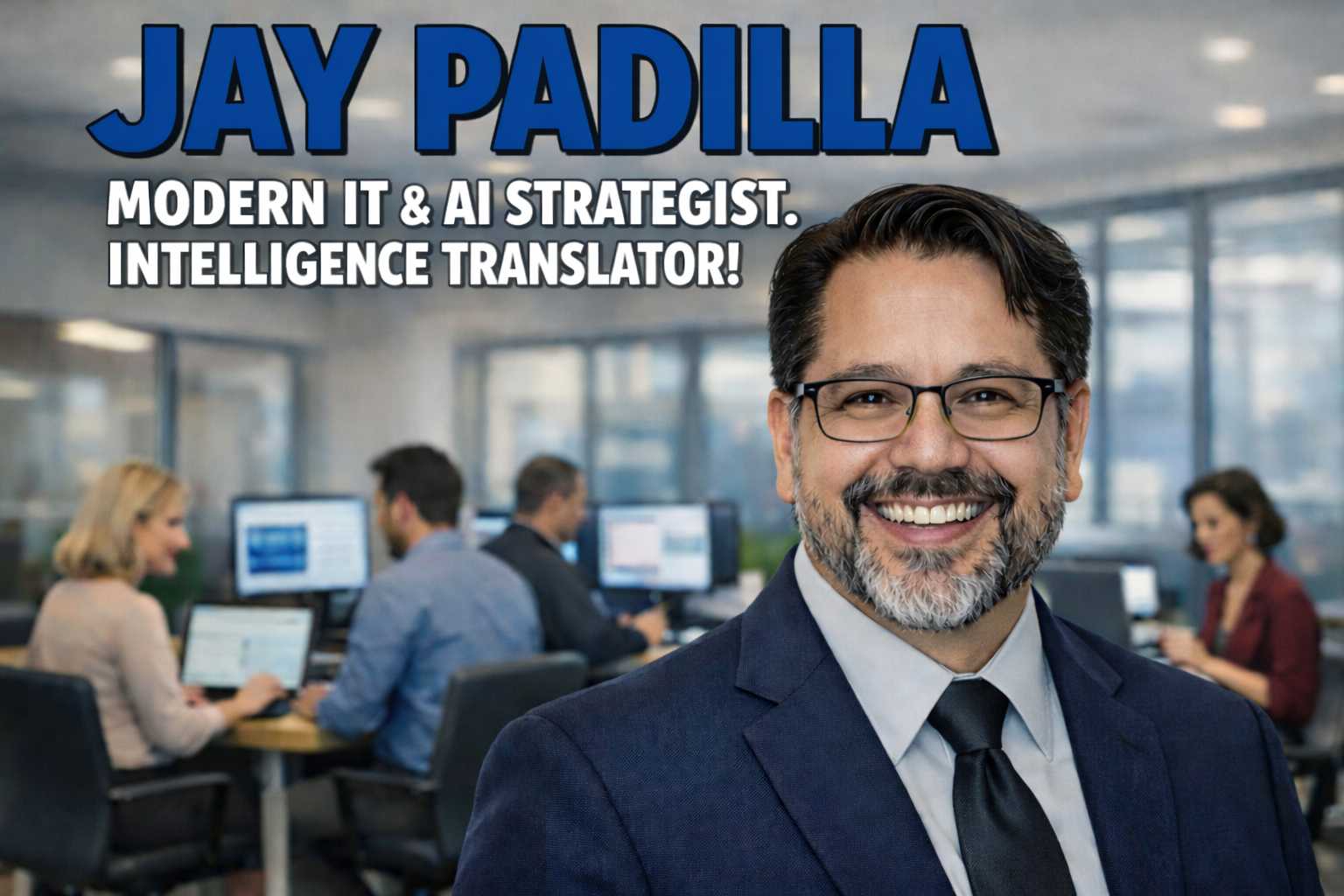
Helping organizations adopt artificial intelligence with clarity, security, and accountability.
Based in Round Rock, Texas. Serving the Austin metropolitan area, all of Texas, the United States, Canada, and South America.
I work as an AI consultant and senior IT consultant for organizations that want to adopt artificial intelligence responsibly, without undermining security, compliance, or operational trust. While many consulting firms focus narrowly on AI tools, models, or rapid proofs of concept, my work focuses on how artificial intelligence actually fits inside real IT environments that already exist.
Most organizations are not starting from a blank slate. They are operating within complex systems built over years or decades. Identity platforms have evolved organically. Permissions have accumulated. Data exists across Microsoft 365, cloud platforms, line of business systems, and collaboration tools. Security and compliance requirements are real, not theoretical.
Across the Austin area, throughout Texas, and across organizations in the United States, Canada, and South America, leaders face the same challenge. They know AI can improve efficiency and decision making, but they are unsure how to integrate it safely into existing systems without creating new risk.
My role is to translate AI capability into operational reality. This includes AI strategy, governance, identity and access alignment, security considerations, and training teams to use AI as a support for human judgment rather than a replacement for accountability.
AI does not fail only because a model is weak. It fails when the surrounding system is unclear. If identity boundaries are inconsistent, AI amplifies access mistakes. If governance is undefined, teams create shadow usage. If responsibility is vague, accountability disappears at the exact moment it matters most.
The common failure pattern is predictable. A tool is introduced quickly. It appears useful. It spreads unevenly. Data exposure becomes unclear. Decision making becomes inconsistent. Leaders then face a new operational question that is not about AI capability. It is about control.
Responsible AI adoption is not a one time purchase. It is a systems decision. It must be anchored in identity, security, governance, and clear human ownership from day one.
In practice, responsible AI work starts with boundaries. What data can be used and what data cannot. Which roles can access which outputs and why. Where human verification is required and how that verification is recorded. What must be auditable. What must be refused.
From there, the work becomes integration. AI must fit the tools people already use. Microsoft 365, ticketing systems, shared drives, collaboration platforms, knowledge bases, and line of business workflows. The goal is not novelty. The goal is dependable support for human work.
Finally, the work becomes stewardship. AI systems drift quietly over time. Teams change. Processes change. Data sources change. If the system is not designed to remain understandable, it becomes a risk surface rather than an asset.
AI systems must respect identity boundaries, permissions, and least privilege access. Without stable identity foundations, AI amplifies risk instead of value.
Successful organizations define acceptable AI use early, reducing uncertainty, shadow usage, and inconsistent decision making across teams.
AI assists reasoning and analysis, but verification and accountability remain human responsibilities at every decision point.
AI creates value when it fits naturally into existing workflows, tools, and operational processes rather than operating as a disconnected overlay.
AI must operate within real security, compliance, and regulatory boundaries, not theoretical or aspirational ones.
Continuous review ensures AI remains an asset over time by monitoring both operational impact and emerging risk.
AI systems degrade quietly. Ongoing validation ensures outputs remain aligned with intent, structure, and responsibility as systems evolve.
Clear ownership, access controls, and auditability define where AI assists decisions and where humans remain explicitly accountable.
AI systems require stewardship, review cycles, and clear exit paths to remain understandable, maintainable, and safe over time.
I am based in Round Rock, Texas and actively serve organizations throughout the Austin metropolitan area and across the state of Texas.
In addition to Texas based engagements, I work with organizations throughout the United States, Canada, and South America. Many of these relationships are remote by design, supporting distributed teams, cross border operations, and multi regional environments.
Engagements range from short advisory assessments and AI readiness reviews to longer term consulting relationships focused on governance, training, and responsible integration at scale.
AI readiness assessment focused on identity, security, and governance. Responsible usage policy and boundary definition. Secure integration planning for Microsoft 365 and existing workflows. Human verification design for high impact decisions. Training for teams who need practical and accountable usage.

If you are exploring AI consulting or IT strategy and want an experienced, grounded perspective, I welcome the conversation.